Realization
Measurable Execution
"Awareness without action is a daydream. Ownership without execution is an empty promise. Realization is when everything becomes real."
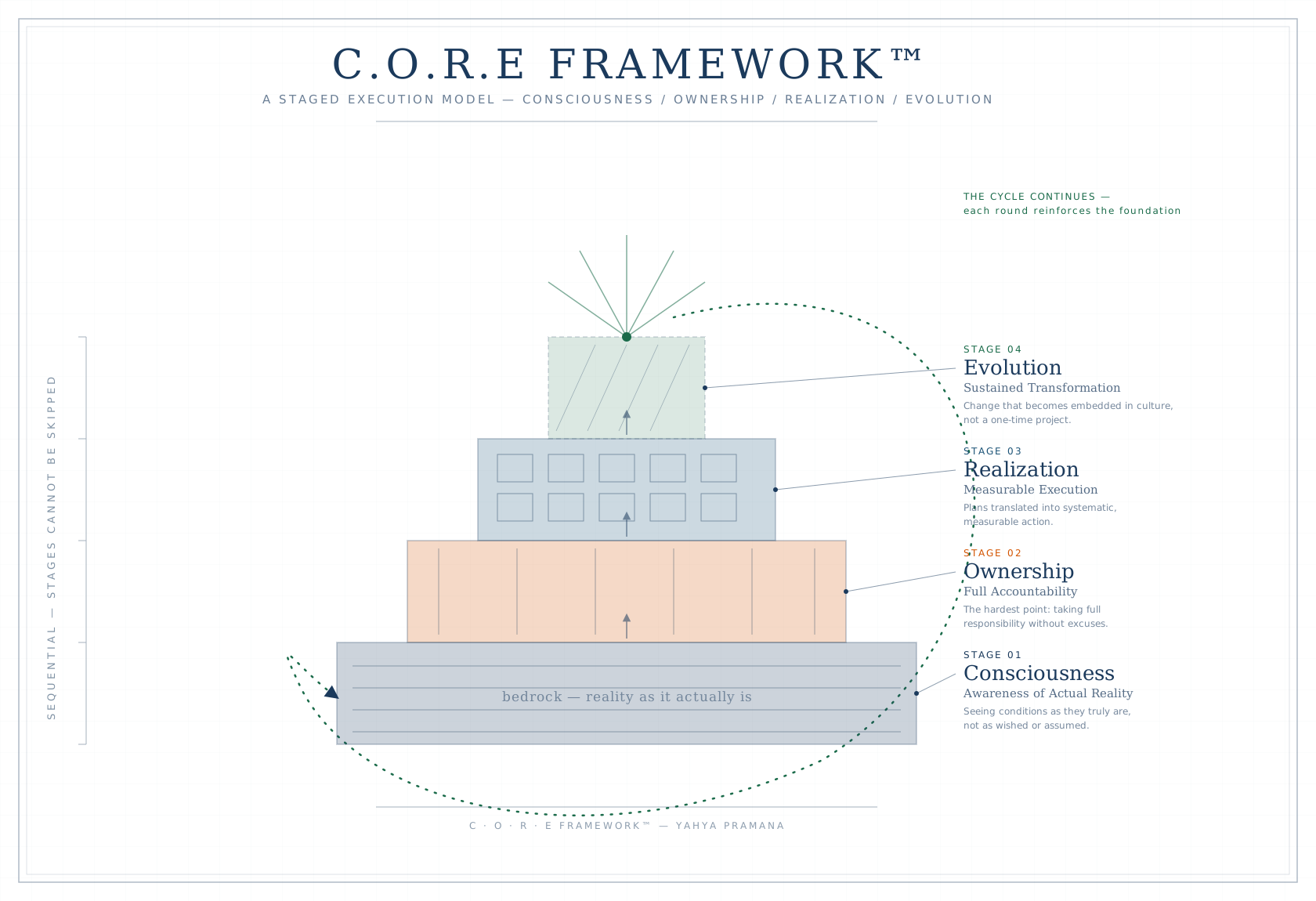
Realization is measurable, systematic execution. Consciousness and Ownership only matter if they translate into real action in the field — every day, every week.
This phase builds the habit of execution: setting realistic plans, tracking progress consistently, and building a rhythm of accountability that doesn't depend on momentary motivation.
Signs Realization Is Weak
- Plans always look good on paper but are rarely fully executed
- Progress reviews are rare or unsystematic
- Action items from meetings are never followed up
- Commitments keep getting displaced by "urgent priorities"
Results After the Realization Phase
- A consistently running execution system
- KPIs and targets tracked in real time
- Leadership habits that push the team toward action, not just planning
Want to Apply This More Deeply?
Realization is often misread as being about "working harder" or "more discipline." In reality, Realization is about system design — how a plan gets translated into small, trackable steps that can be corrected mid-course, and that don't depend on anyone's daily mood or motivation, including the leader's own.
A Real Scenario
A B2B sales team set an ambitious target at the start of the quarter with a solid plan on paper. But evaluation only happened once, at quarter's end — by which point the target had already been missed by a wide margin. After coaching, the team changed just one thing: a 15-minute weekly checkpoint, not to report status, but to answer one question — "what's blocking progress this week, and what will I do differently next week." A deviation that used to only become visible in month three now shows up in week two — early enough to correct.
A Common Misconception
Many assume Realization means working longer hours or more of them. This is wrong — two teams can work the same number of hours, yet one produces measurable proof while the other only produces activity. Realization isn't about the volume of work, but about whether every action is connected to a system that can detect deviation early, before that deviation becomes a major failure that can no longer be corrected.
From Realization to Evolution
Execution that succeeds once isn't guaranteed to last. Many teams hit their target for one quarter, then revert to old habits once the pressure eases or the coaching program ends. Healthy Realization leaves one question unanswered: will this execution system keep running without me continuing to watch over it? If the answer is no, what's been achieved is only momentary execution, not a permanent capability — and that's the work of the Evolution phase.
Ask Yourself
- Of all the plans I made this month, how many have a mid-course checkpoint, not just a deadline at the end?
- When was the last time I corrected direction before a problem grew large, rather than after?
- If I stopped watching my team this week, is the execution system in place strong enough to keep running?