Ownership
Full Accountability
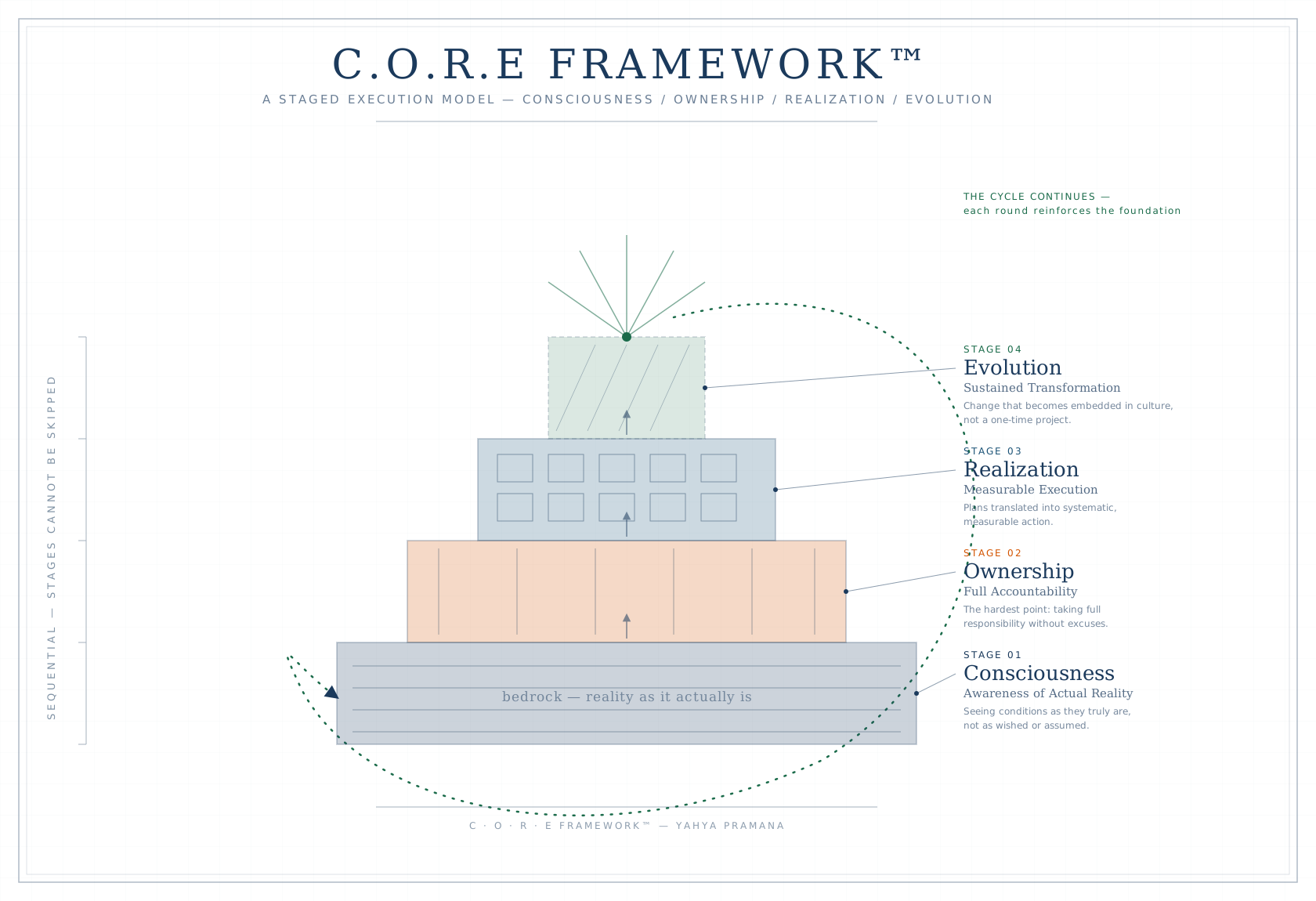
"No transformation begins by blaming external conditions. It all begins with one decision: 'This is my responsibility.'"
Once aware, the next step is taking full ownership — not blaming market conditions, a supposedly weak team, or an unsupportive system. Ownership means: it is my responsibility to change it.
This is what separates leaders who truly transform from those who simply attend training and return to old habits. Ownership is the turning point — and often the hardest one.
Signs Ownership Is Missing
- "My team is hard to change" — with no reflection on one's own leadership
- There is always an external excuse when targets are missed
- Waiting for ideal conditions before taking action
- No personal accountability for team results
Results After the Ownership Phase
- Internal commitment that doesn't depend on external conditions
- A culture of accountability that starts with the leader
- Mental readiness to execute change
Want to Apply This More Deeply?
Ownership is often misunderstood as being about a "tough" mindset or simply working harder. In reality, Ownership is a very specific, narrow decision: taking full responsibility for the outcome, without waiting for someone else to change first. It isn't about excessive self-blame — it's about no longer placing control over the outcome in someone else's hands.
A Real Scenario
An FMCG distribution branch manager spent years blaming "a lazy field team culture" for missed targets. After a coaching session, he was asked to write down one concrete decision he could make that week — not about changing his team, but about changing how he led. He decided to join one sales rep in the field every week, rather than only reading reports. Within three months, it wasn't his team that changed first — it was how he led, and that's what triggered the change in the team.
A Common Misconception
Many assume Ownership means bearing every mistake alone, including other people's — this is wrong and actually unhealthy. Ownership isn't about personally absorbing the team's mistakes, it's about no longer searching for someone to blame before acting. A leader with healthy Ownership can still acknowledge that the team or system has shortcomings — the difference is they don't stop there. They ask "what can I do now, given this situation," not "who should be held responsible for this situation."
From Ownership to Realization
Ownership that stays only at the mental level — intention, commitment, belief — hasn't produced anything visible yet. This is the second common trap after Consciousness: a leader feels they've "changed from within," but that change never shows up as consistent, measurable action. Healthy Ownership always pushes toward one follow-up question: if this is truly my responsibility, what specific action will I take this week, and how will I know it worked? That question is what carries Ownership into the Realization phase.
Ask Yourself
- When was the last time I changed my own approach before asking my team to change?
- What problem have I long considered "not my authority," when I actually had room to act?
- If I stopped looking for external excuses this week, what action would I take instead?