Consciousness
Awareness of Actual Reality
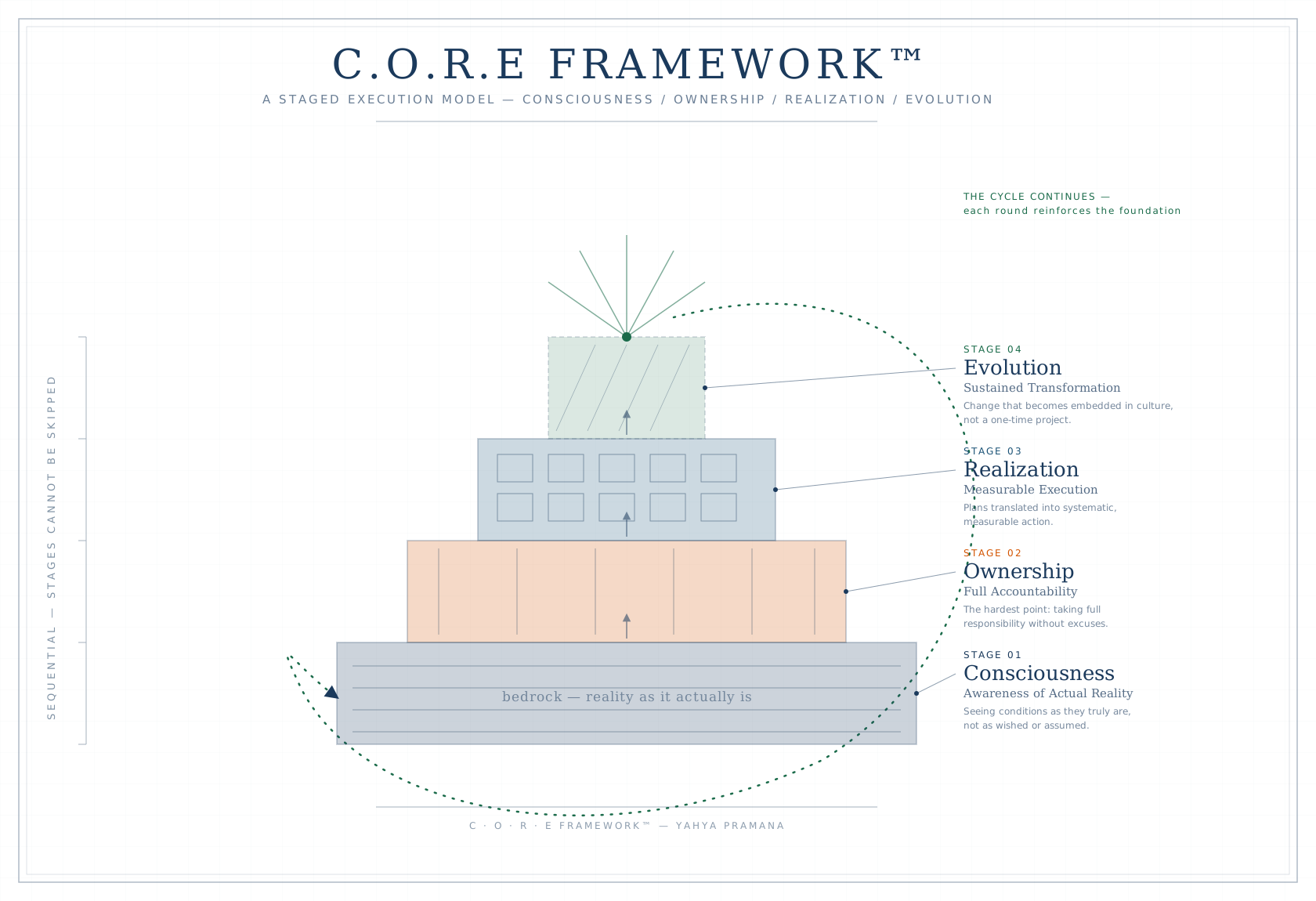
"You cannot lead change if you are not aware that change is needed — or don't know where the starting point is."
Consciousness is the foundation of everything. A leader must be aware of the actual reality — the condition of the team, the market, the process, and themselves — not the reality they wish for or the one that looks tidy in a presentation.
Without accurate awareness, every strategy is built on flawed assumptions. C.O.R.E begins here: seeing honestly, not hoping.
Signs Consciousness Is Missing
- Always certain the problem lies with the team, never the system or oneself
- Field data never matches the "feeling" about business conditions
- Decisions are made on assumption, not actual fact
- Feedback from the field is rarely heard or taken seriously
Results After the Consciousness Phase
- An accurate baseline of team and organizational conditions
- Awareness of one's own leadership blind spots
- An honest foundation for designing the right change
Want to Apply This More Deeply?
What makes Consciousness difficult isn't that the concept is complicated — it's the opposite. Most leaders already feel sufficiently aware of their business conditions. The problem is that false awareness feels exactly the same as accurate awareness from inside the mind of the person experiencing it. That's why Consciousness isn't just "knowing the field data" — it's the willingness to keep questioning what you've long believed to be true.
A Real Scenario
A sales director believed his team wasn't aggressive enough in closing, so he kept increasing target pressure and incentives. After two quarters with no improvement, he finally went to the field himself — and discovered the real problem wasn't team aggression at all, but a pricing approval process from headquarters that was far too slow, causing many prospects to switch to competitors before the final offer was ready. The data he'd been watching on the dashboard was numerically correct, but wrong about the root cause — because the dashboard only recorded "closing failed," not "why it failed."
A Common Misconception
Many assume Consciousness means collecting as much data as possible — more reports, more awareness. This is wrong. An organization can have an extremely complete dashboard and still be unaware of the real problem, because the data collected only answers questions that are comfortable to ask, not the ones that actually need answering. Consciousness isn't about the volume of data, but about honesty in interpreting it — including the willingness to accept that the problem may lie with oneself as a leader.
From Consciousness to Ownership
Honest awareness, on its own, changes nothing — it only opens your eyes. The most vulnerable point in the C.O.R.E journey actually appears right after Consciousness is reached: many leaders stop here, feeling satisfied because they now "understand the problem," without ever taking the next step of truly taking responsibility for it. Healthy Consciousness always leads to one uncomfortable question: now that I know — am I willing to make this my responsibility to fix? That question is the doorway into the Ownership phase.
Ask Yourself
- When was the last time I changed a major decision because of field data, rather than my prior assumptions?
- Is there a problem I believe I already understand, but have never actually verified at the source?
- If my team were given honest space with no risk, what do I think they'd say that differs from what I've been hearing?